

How to source knitwear from Tiruppur: a 7-step guide
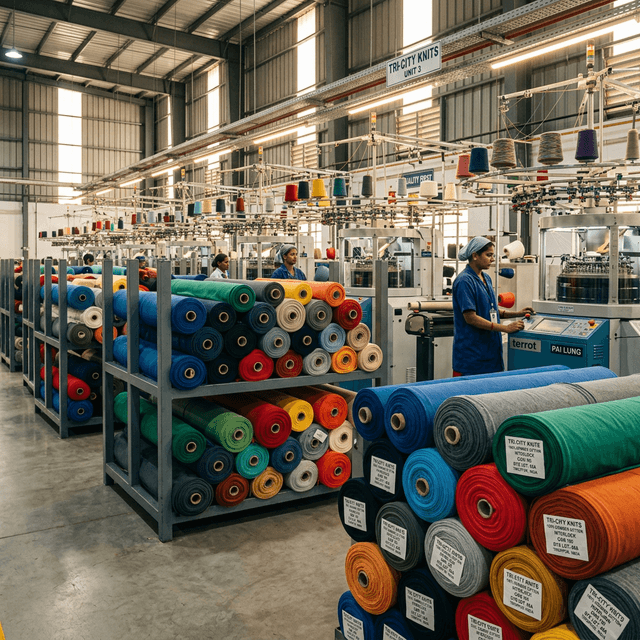
Tiruppur — India's “Knit City” — is one of the largest knitwear hubs on earth, with a fully integrated ecosystem from yarn to finished garment. For a brand, that density is a gift and a maze. Here's a practical seven-step path to sourcing there.
1. Nail your tech-pack first
Before you talk to anyone, document the garment: fabric, GSM, fit/measurements, colours, trims, prints and packing. A clear tech-pack is the difference between accurate quotes and guesswork. No tech-pack? A buying office can help you build one from a sample or sketch.
2. Decide: factory direct or buying office
Going factory-direct can work if you have large volumes, time, and someone who can manage quality on the ground. For most brands — especially at low MOQs — a buying office gives you factory access plus design, QC and logistics in one relationship, and protects you from the classic pitfalls.
3. Verify the unit, not just the website
Check GST registration, export codes, certifications (with scope certificates), and ask for a QC report sample. Anyone can publish a glossy site; documents and references are what matter.
4. Sample before you commit
Always approve a physical sample — fit, fabric hand-feel, print quality and wash. In Tiruppur, sampling typically takes 7–12 days. Treat the sample as a contract for what bulk should look like.
5. Agree quality standards in writing
Specify an AQL level (2.5 is standard) and inline, mid-line and final inspection points. Quality that isn't written down isn't agreed.
6. Understand the true lead time
Bulk production usually runs 30–45 days after approvals, but yarn availability, dyeing and embellishment can extend it. Build a buffer and confirm the critical path up front.
7. Plan logistics early
Sea freight is cheapest for volume; air is faster for newness and replenishment. Decide Incoterms, customs handling and door-to-door delivery before goods are ready, not after.
The shortcut
Every step above is something a buying office does for you. At Algostairs we run all seven — from tech-pack to shipment — across a vetted network of certified Tiruppur units, at a 100-piece MOQ, for brands in the US, Europe and the Middle East.
Clothing MOQ in 2026: how low can you really go?
What minimum order quantities actually look like in 2026, why low MOQs matter for new brands, and how a buying office lets you start at 100 pieces.
GOTS vs OEKO-TEX: which certification does your knitwear need?
A plain-English guide to the two certifications buyers ask about most — what each one actually proves, and which your knit program needs.